
 By
By 
Your front and rear bumpers are among the most exposed parts of your vehicle, constantly subjected to road hazards, parking challenges, and weather elements. While designed to absorb physical impact, bumpers often suffer from cosmetic damage—scratches, chips, scuffs, and stains—that can reduce your car’s value and appearance. That’s where Paint Protection Film (PPF) comes in.
PPF is an invisible yet highly durable barrier that shields your bumpers from everyday damage, preserving their finish and integrity for years. Here’s how it works and why bumper protection is one of the smartest applications of PPF.
What Is PPF and Why Bumpers Need It
Paint Protection Film is a transparent, self-healing urethane film applied to painted surfaces. It’s flexible, durable, and highly effective at absorbing impact without harming the original paint.
Bumpers are particularly vulnerable because they’re:
- Constantly hit by flying road debris like gravel and salt
- Frequently exposed to bug splatter, tree sap, and road tar
- Subject to light collisions in tight parking spots
- Affected by harsh UV rays, rain, and seasonal contaminants
Over time, these exposures can chip the paint, dull the finish, or create micro-abrasions—all of which are expensive to fix. Installing PPF ensures your bumpers stay looking new, without the need for constant touch-ups or repainting.
What Makes Pellicule Pare-Perre Ideal for Bumpers?
Not all PPF is equal. Bumper areas demand a film that can handle intense exposure and conform to curved surfaces without lifting or discoloration. Proshield pellicule pare-perre is specially engineered to meet those challenges.
Here’s why it’s a superior choice:
Advanced Durability
Proshield PPF resists impact from rocks, pebbles, and other debris kicked up while driving. It also withstands chemical staining from insect acids, road salt, and fuel spills that are common around the bumper zone.
Self-Healing Properties
Minor scratches from automatic car washes or brushing against bushes disappear with heat exposure. This keeps your bumper looking smooth without needing refinishing or polishing.
Optical Clarity
The film offers excellent transparency, maintaining the original paint color and gloss. It’s virtually undetectable once applied, so your car looks sharp without any noticeable film lines or color shifts.
Edge-Sealing Adhesion
Bumper contours can make film installation tricky, especially around air vents, sensors, and creases. Proshield’s adhesive system ensures a secure, bubble-free fit that doesn’t peel or trap dirt over time.
Specific Protection Zones on Bumpers
Front Bumper
- Grille and lower lip: These areas are highly prone to chips and road grime.
- Corner edges: Often hit in parking lots or during tight turns.
- Headlight edges and sensors: Easily scratched or affected by bug splatter.
Rear Bumper
- Loading area: Protects against scratches from placing or removing cargo.
- Parking scrapes: Guards the most common scuff zone in urban environments.
- License plate area: Prevents scratching during cleaning or plate changes.
Installation Considerations
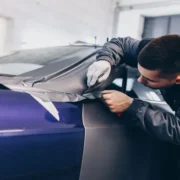
For best results, bumper PPF should be installed by trained professionals. Bumpers often require:
- Heat shaping and edge wrapping for tight curves
- Pre-cut kits or custom-fitting based on your vehicle model
- Thorough surface prep to ensure adhesion and clarity
A quality installation will result in a seamless finish that’s both functional and nearly invisible.
Long-Term Benefits
- Preserves factory paint and resale value
- Reduces the need for costly repainting
- Improves car wash durability
- Makes cleaning easier thanks to its hydrophobic surface
Most high-grade films like Proshield offer warranties ranging from 7 to 10 years, ensuring your investment continues to protect for nearly a decade.
Conclusion
Your front and rear bumpers are constantly under attack from the environment and daily driving hazards. Applying Paint Protection Film—especially a high-performance option like Proshield pellicule pare-perre—is a smart, cost-effective way to preserve your car’s appearance and value. With its self-healing, weather-resistant, and impact-absorbing features, PPF transforms vulnerable bumper zones into long-lasting, damage-resistant surfaces.






Comments