
 By
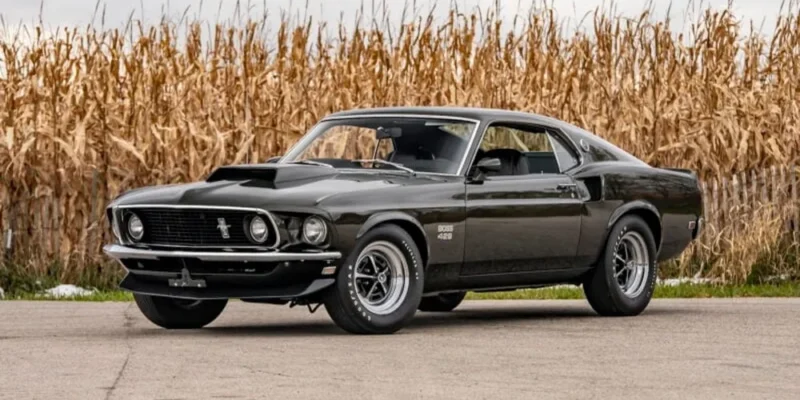
Ford played an important role in the development of the American muscle car era. During the 1960s, car manufacturers were competing to build faster and more powerful vehicles. Large engines were becoming popular, but Ford took a different approach by developing smaller and lighter V8 engines that could still deliver strong performance.
The history of American performance cars is closely connected to Ford’s development of innovative engines and lightweight vehicle designs. Ford muscle cars became especially notable for combining strong V8 performance with practical road-going characteristics, helping make high-performance driving accessible to a wider audience. Their influence can still be seen in the way enthusiasts value powerful engines, distinctive styling, and responsive driving experiences today.
This approach helped Ford create cars that were quick, affordable, and enjoyable to drive. It also showed that a powerful muscle car did not always need the biggest engine available.
The Rise of the Small-Block V8
Ford introduced its small-block V8 engine family in the early 1960s. The first version had a displacement of 221 cubic inches, followed soon by larger versions with 260 and 289 cubic inches. By the late 1960s, the engine had grown to 302 cubic inches, while another larger version reached 351 cubic inches.
The main advantage of these engines was their compact size and relatively low weight. Their design allowed engineers to produce strong performance without adding unnecessary weight to the front of the vehicle. This helped improve handling while giving drivers plenty of power.
Performance Became a Priority
During the 1960s, Ford began placing greater importance on performance. Its engines were used in both road cars and racing vehicles, helping the company build a reputation for speed and engineering.
Engineers continued improving the small-block V8 by developing better cylinder heads, stronger internal parts, and improved ways of moving air through the engine. These changes allowed the engines to produce more power while maintaining their compact design.
Surviving the 1970s
The muscle car industry faced major challenges during the 1970s. Rising fuel prices and stricter emissions regulations forced manufacturers to reduce engine performance.
Ford’s V8 engines also became less powerful during this period. However, the company continued developing the technology rather than abandoning performance completely.
By the early 1980s, performance cars were beginning to make a comeback. Ford brought back a stronger 5.0-liter V8, giving enthusiasts a more exciting option during a time when many performance cars were still struggling.
Entering the Modern Era
The 5.0-liter V8 continued to improve throughout the 1980s. Carburetors were gradually replaced by electronic fuel injection, while improvements to engine management, cylinder heads, and internal components helped increase performance and efficiency.
These developments made the V8 more reliable and easier to use while also bringing back the excitement associated with earlier muscle cars.
Ford’s Lasting Influence
Ford helped shape the American muscle car era by showing that performance could come from smart engineering rather than simply using the largest possible engine. Its small-block V8 family became an important part of American performance-car history and influenced generations of enthusiasts.
From the powerful cars of the 1960s to the high-performance V8 models of the 1980s and 1990s, Ford continued adapting its engines to changing times. Its combination of power, lightweight design, reliability, and racing experience helped create a lasting legacy that continues to influence muscle car culture today.










Comments